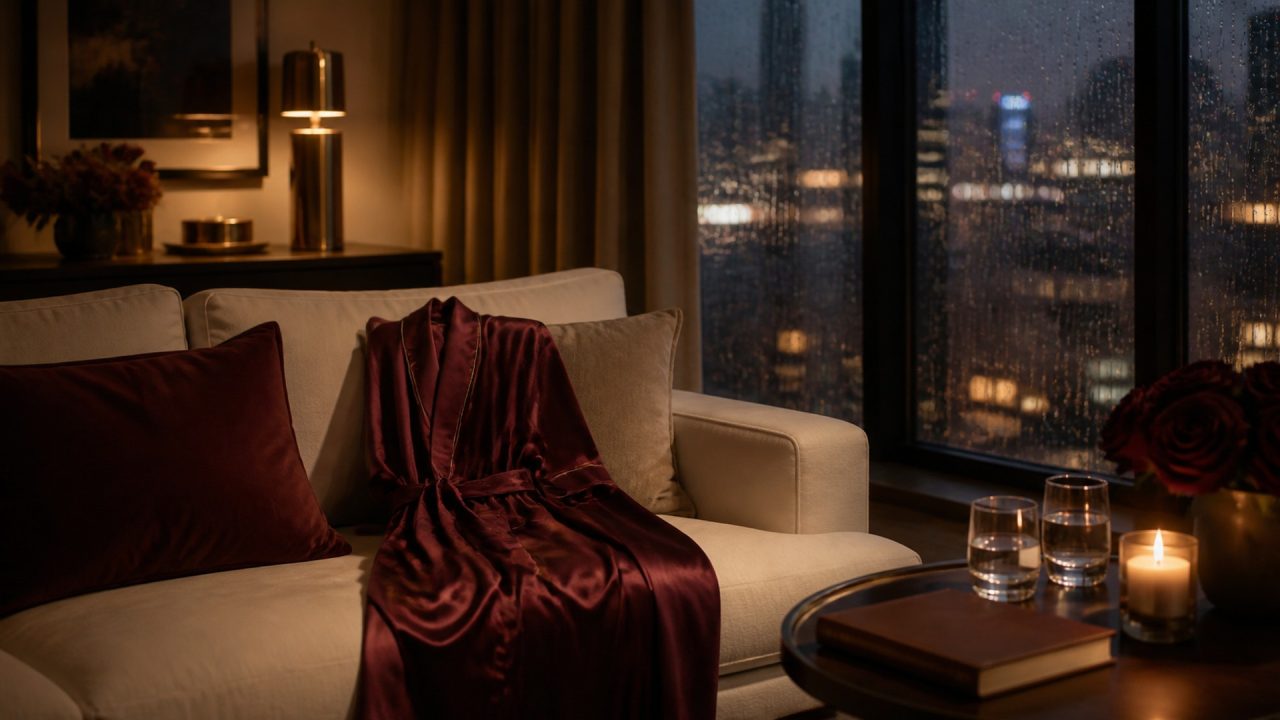

When the city has spent too much of me, I do not ask an evening to repair everything. I run a bath. Not as a reward I have earned by being exhausted, and not as a performance of self-care with too many rules. I do it as a way of returning to my own attention.
A private bath ritual, for me, is less about what I add than what I stop carrying into the room. I leave the phone outside. I take off the clothes that still feel like the day. I let warm water make a small boundary around the next hour. The point is not to become a different woman by the time I step out. It is to hear the woman I already am a little more clearly.
This is how I make a bath feel restorative without turning it into an elaborate project: a little preparation, a few quiet choices, and enough unclaimed time for the evening to soften on its own.
Begin with water, not an agenda
I used to postpone a bath until I had chosen the right music, found the right book, and decided what the evening ought to mean. That is an efficient way to make even rest feel like work.
Now I begin with the simplest action: I turn on the water. The sound is enough to interrupt the day’s momentum. While the tub fills, I take off my jewelry, drink a glass of water, and make one decision only: that I am not going to rush the next part.
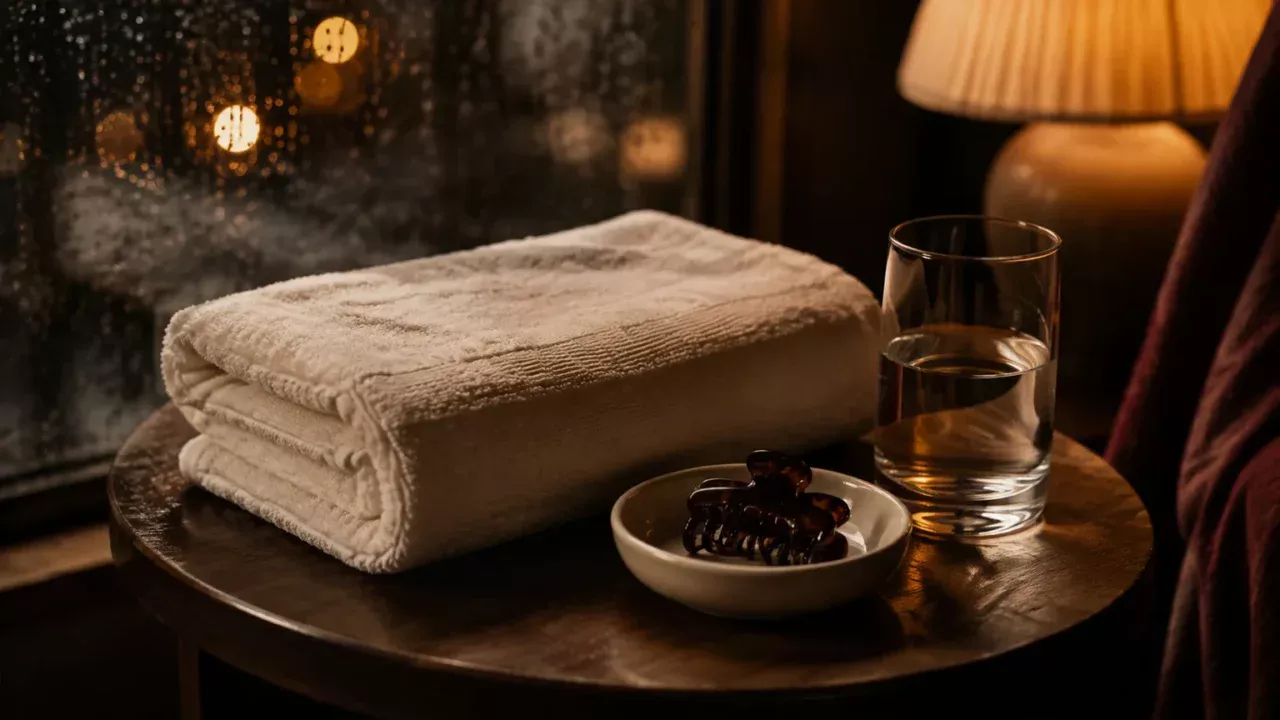
I do not need the water to be painfully hot to feel cared for. I want it warm enough that my shoulders lower when I step in, and comfortable enough that I can stay with myself rather than enduring some imagined version of luxury. If the room is cold, I warm a towel first. If I am tired, I keep a second glass of water nearby. Comfort is not a detail to apologize for. It is the beginning of the ritual.
There is something quietly reassuring about choosing a bath without needing it to solve a problem. I am not trying to become more productive, more beautiful, or more available afterward. I am simply making room for a slower rhythm.
That distinction changes the whole atmosphere. I do not save this ritual for a perfect Friday or wait until I have earned a long, impeccable evening. A bath on an ordinary Tuesday can be enough. A short bath after a difficult call can be enough. I trust small pauses more when I stop demanding that they justify themselves.
Make the room ready before the bath
The room does not need to look like a hotel to feel private. In fact, I prefer it not to. Perfection makes me self-conscious. A few deliberate gestures are enough: a clean towel within reach, a robe or soft clothes waiting nearby, the counter cleared of whatever belongs to tomorrow.
I lower the light before I get in. A small lamp from the next room, a dim bathroom light, or the blue hush from a rainy window is often more convincing than anything theatrical. I want to see the water and the shape of the room, but I do not need every surface to announce itself.
I also remove the things that pull me back into obligation. The open laptop goes away. The laundry basket can wait. I leave the door closed if privacy helps, or slightly open if the sound of the apartment makes me feel less alone. A ritual should follow the person having it, not a picture of what a ritual is supposed to be.
Choose comfort over an elaborate recipe
I like a bath that asks very little of me. I do not measure out a dozen ingredients or make the water carry a fragrance so strong that it becomes the whole experience. Some evenings, clean water is enough. On others, I add a small amount of something familiar that I already know I enjoy. The important word is small.
My rule is that nothing should make the bath harder to leave than it was to enter. I do not want glitter that will follow me into the week, petals that turn cleanup into a chore, or a complicated sequence of treatments waiting at the edge of the tub. Beauty is allowed to be simple.
If my skin is feeling sensitive or I am uncertain about something new, I leave it out. The ritual is not a test of how many things I can tolerate. It is a practice of noticing what feels good, what feels unnecessary, and what I would rather not bring into the water at all. I prefer to keep that kind of attention uncomplicated.
That restraint gives the senses room to do their own work. I notice the warmth rising around my wrists. I notice the clean scent of the towel. I notice the first moment when my jaw unclenches without being asked. These are modest things, but they are not insignificant. They are the texture of returning.
If I have only twenty minutes, I do not pretend I have an entire night. I use the time I have and let it be enough. A ritual becomes kinder when it is not another standard I can fail to meet.
Let the bath be a pause, not a performance
There is a particular kind of loneliness that appears when I treat every quiet moment as content I should be documenting, improving, or explaining. A bath offers me a small refusal. No audience is needed. Nothing important has to happen.
I leave my phone out of reach, especially at the beginning. I might bring in a book, but I do not require myself to read it. Sometimes I put on one album and let it end without replacing it. Sometimes I listen to the pipes, the rain, or the ordinary sound of a building settling around me.
This is not a ceremony of perfect stillness. My thoughts still wander. I remember an email I have not answered. I replay a sentence I wish I had said differently. When that happens, I do not correct myself. I let the thought pass and turn my attention back to something physical: the water moving when I shift, the cooler air against my shoulders, the weight of my hands resting in my lap.
A private bath ritual feels sensual to me because it is unhurried, not because it has to lead anywhere. I am allowed to enjoy warmth, privacy, and the simple fact of being at ease in my own body without making that ease perform for anyone else.
Keep the senses gentle
I do not try to give every sense an assignment. One soft source of light is enough. One familiar scent, if I want one, is enough. I keep a glass of water where I can reach it without leaving the room. The fewer competing signals I create, the more I notice what is already there.
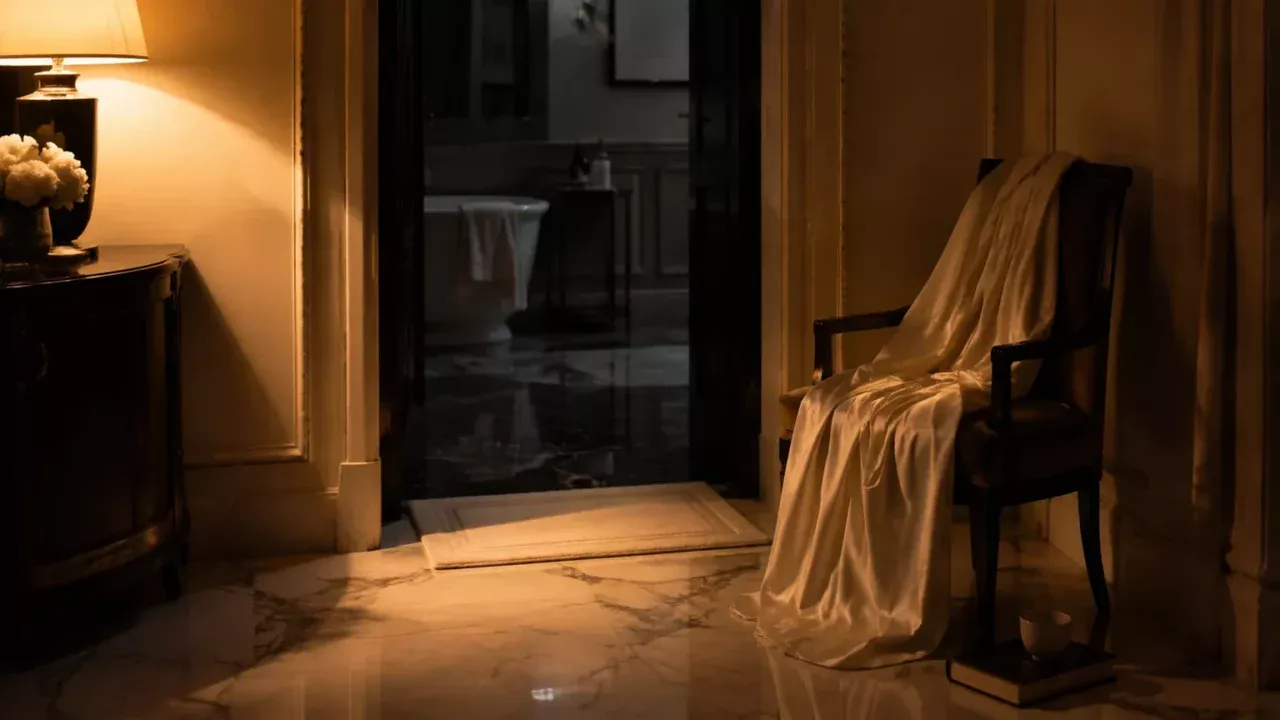
Texture matters most to me after the bath. I like a towel that feels generous, a robe that does not ask to be admired, a clean shirt or sleepwear that tells my body the evening has changed direction. These choices are not decoration. They are a way of extending the pause for a few minutes longer.
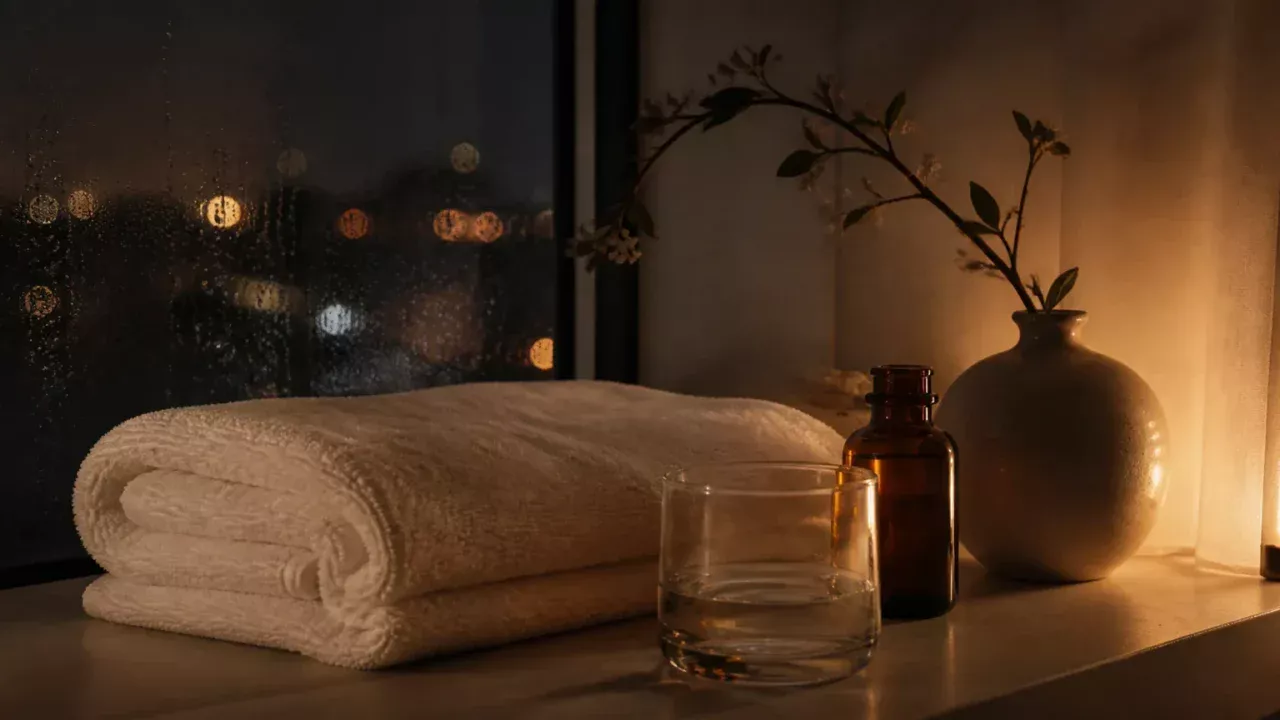
I avoid turning the bathroom into a showroom. A room can be beautiful without being crowded. One object I genuinely love—a small dish, a branch in a vase, a book waiting face down—does more than a dozen things I chose because they seemed required.
When I share a home with someone, I am equally protective of this gentleness. Privacy is not secrecy, and a closed door is not a rejection. Sometimes the most intimate thing I can do is take a little time alone, then return to the rest of the evening less defended and more present.
I keep the practical edges of the room simple, too. I place what I need where I can reach it, check that the floor is clear, and do not leave anything burning or precarious while I am trying to relax. A private ritual should feel safe enough that my attention can soften. Care is part of the mood; it does not interrupt it.
Leave the last ten minutes unclaimed
The part I love most happens after I pull the plug. I do not rush to dress, open my messages, or fill the room with the next task. I dry off slowly. I drink the water I set aside. I sit for a moment in the robe, or stand by the window while the mirror clears.
Those last ten minutes are where the bath becomes more than a bath. They are the proof that I do not have to turn immediately back toward the world. I can let the warmth remain in my skin. I can let a thought arrive without needing an answer. I can choose an early night, a book, a conversation, or nothing in particular.
I do not always emerge transformed. That is not the promise. But I often emerge more legible to myself: quieter, less scattered, less willing to confuse urgency with importance. For one evening, that is plenty.
My private bath ritual is not an escape from my life. It is a small way of returning to it without bringing every noise in with me. I begin with water. I make the room kind. I leave the ending open. And when I step back into the evening, I try to carry only what feels lighter.