
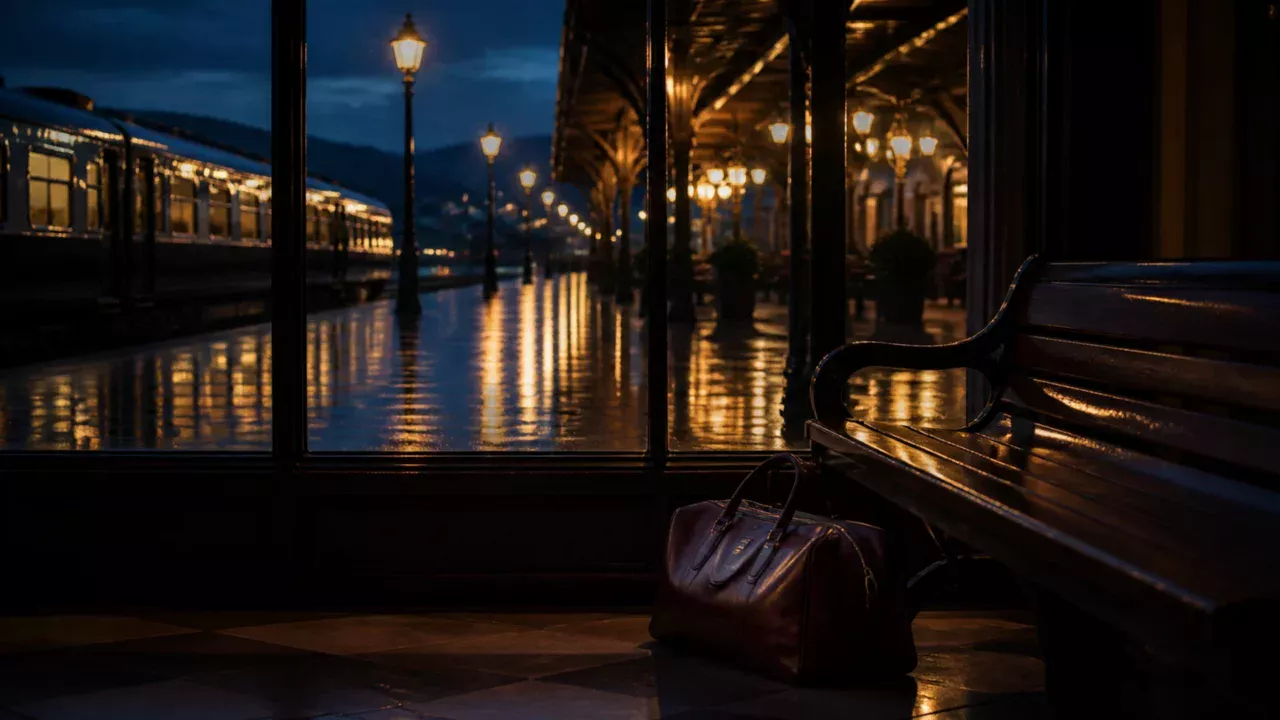
This is one of my sensual stories for women: a rain-soaked night shaped by careful conversation, clear choices, and the courage to stay curious. By the time I reached the platform, the last train had already gone.
The departure board had changed its mind without ceremony. One moment there had been a white line of possibility under the station clock; the next, there was only the small blue word departed, reflected in the wet tiles beneath my shoes. I stood there with my overnight bag touching my calf and the rain darkening the shoulders of my coat, annoyed less by the missed train than by the part of me that had hoped the decision would be made for me.
I had been on my way to the coast for a weekend I had not wanted to explain. A borrowed cottage. A manuscript waiting for its final pages. Two days in which no one would ask me what I was doing next. The ticket had felt like an answer, even if I had not yet found the question.
“You too?” a voice said beside me.
I turned. The man with the black umbrella from the queue was holding a paper cup in each hand. He had the careful, tired expression of someone who had been travelling for work and was trying not to resent the weather for being beautiful at the wrong time. His hair was damp at the temples; his scarf had slipped loose beneath the collar of his coat.
“Apparently I have poor instincts about timetables,” I said.
“Or excellent instincts about staying where it’s dry.” He looked up at the roof, where rain tapped patiently on the glass. “I’m Daniel.”
“Sophia.”
We had spoken once before, an hour earlier, when he had held the station door open as a gust of wind tried to take my ticket. I had thanked him and hurried away. Now there was nowhere useful to hurry to. The last train had gone, the taxis were booked, and the city beyond the station had become a blur of red lights in rain.
The waiting room was warmer than either of us expected
The attendant told us there would be a replacement coach at dawn. Seven hours away. Daniel looked at the clock, then at the two coffees cooling in his hands, and offered one without making it feel like an obligation.
“It is not good coffee,” he said. “But it is hot.”
I accepted it because I wanted to. The difference mattered to me, especially that night. We found two seats at the far end of the waiting room, near a radiator that worked in determined little sighs. There were only three other people left: a woman asleep over a newspaper, a student with headphones, and an older couple who had arranged themselves around a shared sandwich with the ease of a long habit.
Daniel told me he was supposed to be home before midnight. He had promised his sister he would help her move a bookcase in the morning; he had promised himself he would finally tell her he was considering leaving his job. Neither promise could be solved by finding a different train.
“And you?” he asked.
I watched the steam lift from my cup. “I was going somewhere quiet to finish something I have been avoiding.”
“A manuscript?”
I looked at him more carefully. “How did you know?”
“Your bag is full of marked pages. One escaped when you set it down.”
It pleased me that he had noticed the pages rather than trying to invent a grander story about me. I told him I was an editor, and that the manuscript was mine only in the sense that I had been changing it for so long I no longer knew which sentences belonged to the author and which belonged to my fear.
“That sounds like a dangerous kind of work,” he said.
“It is. You can make a beautiful thing less alive by trying to protect it.”
He held my gaze for a moment, not too long. “I know that feeling.”
He had a reason to leave, and so did I
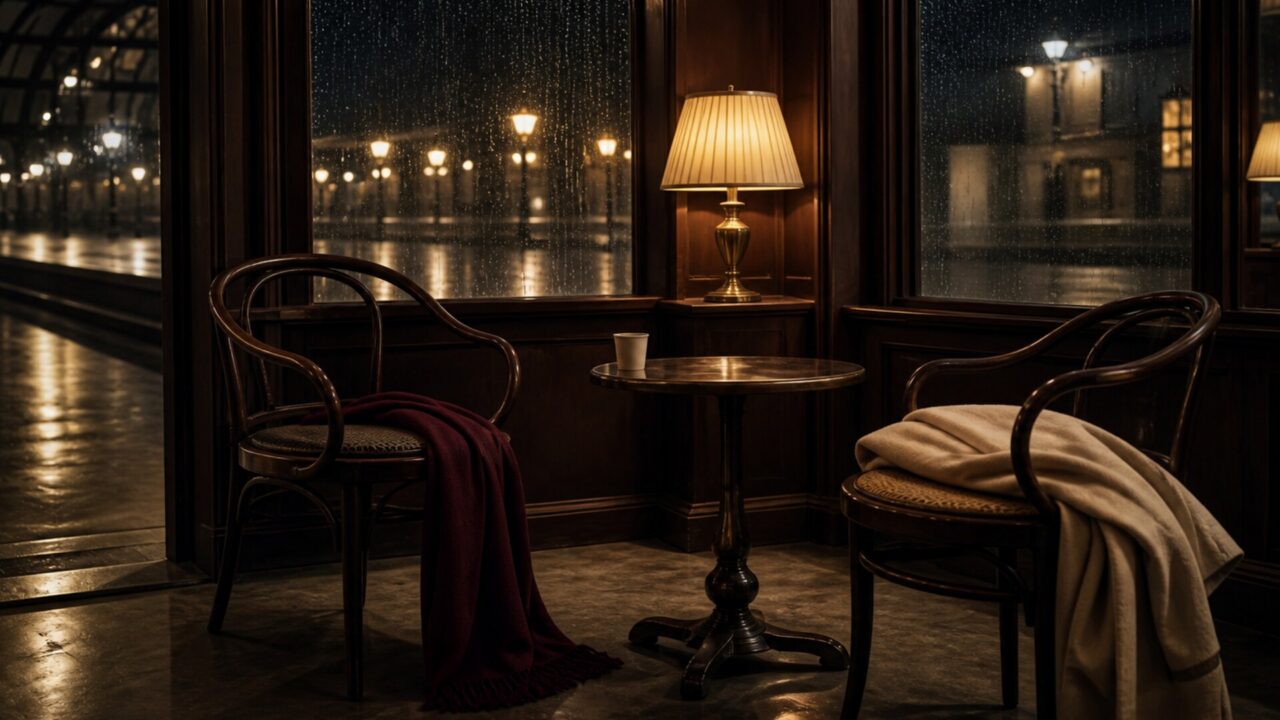
At half past eleven, Daniel called a hotel near the station. The receptionist had one room left, he said, but it had two narrow beds and a rate that made both of us laugh. He could take it if I preferred the waiting room. He could also keep trying for a taxi. He said each option plainly, as if my comfort were not a test of his patience but the only thing worth deciding first.
“You should take it,” I told him. “You have a bookcase to move.”
“And you have a manuscript.”
“That is exactly why I should stay here. A sleepless night may finally make me stop rearranging commas.”
He smiled, then became serious again. “I don’t want to leave you alone here because it would be easier for me.”
There it was: the small, unadorned honesty that changes the temperature of a room. Not rescue. Not pressure. A choice placed between us, open on both sides.
“Then stay until the next pot of coffee,” I said. “After that, we can decide again.”
He nodded. “Again is good.”
We moved to a table beneath the clock and opened my manuscript between us. It was a collection of short pieces about women who leave just before they are expected to stay. Daniel read the first page without offering the false concentration people use when they are waiting for an excuse to praise you. When he looked up, he did not say that it was lovely.
“She keeps calling herself independent,” he said, tapping one paragraph gently. “But I think she is lonely. Not weak. Just lonely. Are you letting her admit that?”
I felt the question land in the place I had spent months avoiding.
“No,” I said.
“Why not?”
Outside, a bus passed through the rain with its windows glowing amber. I could have answered with a joke. I could have told him he was overreading. Instead I tucked a strand of damp hair behind my ear and said, “Because I thought independence was the story I was supposed to tell.”
He did not reach for my hand. He only waited, giving the silence enough room to become kind.
We began with the sentences neither of us trusted
Daniel worked in architecture, though he spoke about it as if the buildings were the least interesting part. What mattered to him, he said, was whether a room allowed a person to feel unobserved without feeling alone. He had spent three years designing public spaces for a firm that wanted every surface to look expensive and every decision to be made quickly.
“I keep making places people can pass through,” he said. “I’m not sure I remember how to make one they would want to remain in.”
“You could leave.”
“I could.” His mouth shifted in something that was not quite a smile. “But leaving would mean disappointing people who have counted on the version of me that never changes his mind.”
I understood that version too well. The woman who was composed, capable, grateful for the invitation but never dependent on it. She had carried me through rooms where I needed her. Lately, though, she had begun to lock doors from the inside.
“Maybe changing your mind is not the same as failing them,” I said.
“Maybe.”
He said it softly. A train announcement crackled overhead, uselessly cheerful, and we both laughed at the timing. When the sound faded, he looked at me with a steadiness that made me aware of my own breath.
“Can I ask something?” he said.
“You can ask.”
“Do you always leave before someone gets the chance to disappoint you?”
The question should have annoyed me. Instead, I admired its courage. He had not claimed to know me. He had offered me a door and waited to see whether I wanted to open it.
“Often enough,” I said. “Do you always stay until a job stops sounding like your own life?”
“Often enough.”
For a while, neither of us said anything. The radiator sighed. My coffee had gone cold. Still, I did not move away.
At midnight, the station became almost private
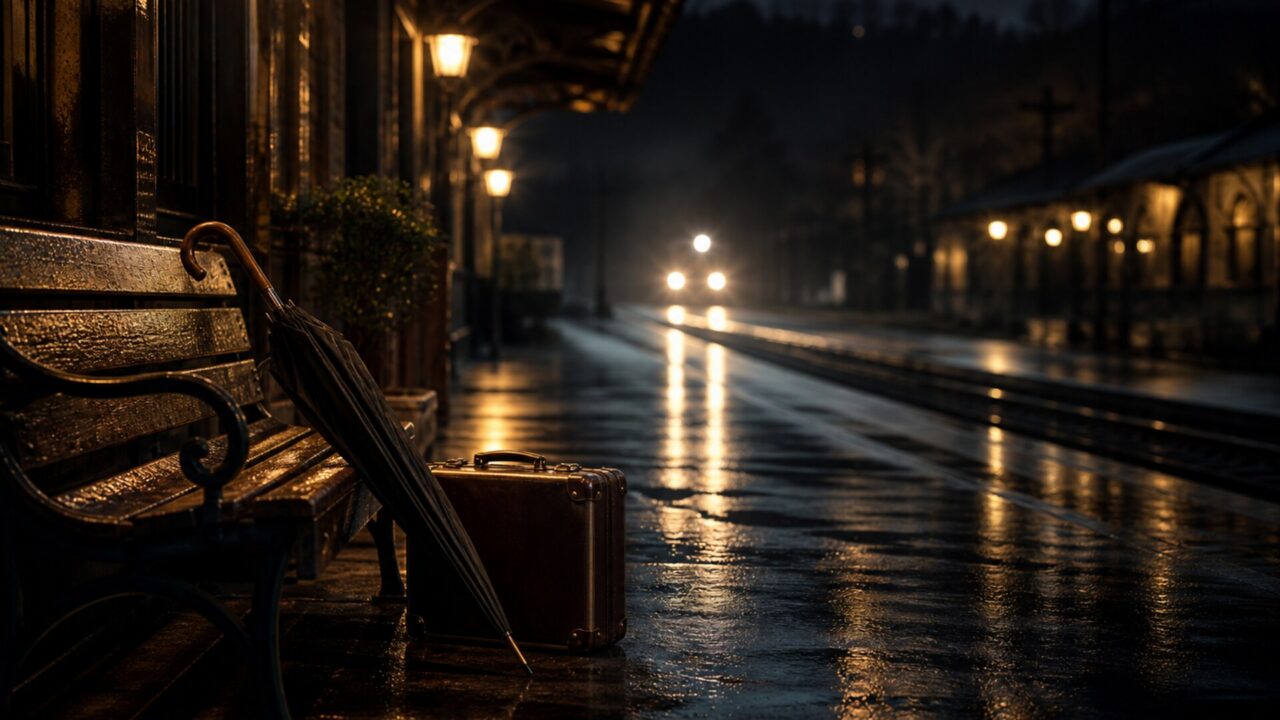
The student left first, then the woman with the newspaper. The older couple disappeared through the doors, carrying their sandwich wrappers together. The waiting room did not belong to us, but its emptiness made each small sound more intimate: the turn of a page, the click of Daniel’s watch against the table, the rain sliding down the glass.
He asked whether I wanted to walk to the hotel and see if the room was still available. Not because he expected anything from the room, he added, but because dawn was still far away and I deserved a bed more than a lesson in endurance.
I considered the offer. I thought of the two narrow beds. I thought of the manuscript open between us. I thought of how easy it would be, tomorrow, to turn this night into a story in which I had been swept along by a stranger’s kindness.
But I was not being swept. I was deciding.
“Yes,” I said. “On one condition.”
“Name it.”
“We do not pretend the room means something it does not. And if either of us wants to sleep, talk, or leave, we say it.”
His expression changed—not with disappointment, but with relief. “That is exactly what I wanted.”
We crossed the street beneath his umbrella. It was barely large enough for both of us, so our shoulders touched now and then when the wind turned. Each contact was accidental, and neither of us made it less so. The hotel lobby smelled of polished wood and rain-damp wool. The receptionist gave us a key without looking up from her book.
In the room, the beds were narrower than promised and the curtains were the colour of dark plums. Daniel set his coat over the back of a chair. I placed my manuscript on the small desk, suddenly shy of its unfinished pages.
“Would you like the bathroom first?” he asked.
“You can take it. I need a minute with the last paragraph.”
He paused by the door. “Sophia.”
I looked up.
“I am glad the train left.”
The words were simple. I could have made them dangerous by answering too quickly. Instead I let myself feel the warmth that came with being seen, and I said, “I am glad you stayed.”
The choice was smaller than the fear around it
When Daniel came back, his shirt sleeves were rolled to his forearms and his hair was still damp from the rain. He sat on the edge of the other bed, leaving the space between us intact. We spoke for another hour, though neither of us would later remember the order of every subject. Books. His sister’s stubbornness. My first apartment with its unreliable radiator. The strange comfort of rooms where no one knows your name.
Eventually, the conversation softened. Daniel looked toward the window, then back at me.
“May I sit closer?”
I felt the old reflex rise: the elegant retreat, the joke, the reason to keep every beautiful thing at a safe distance. It was not wrong to want distance. It was simply not what I wanted then.
“Yes,” I said. “You may.”
He moved to the space beside me, slowly enough that I could change my mind with no performance required. Our knees touched through the blanket. He did not take my hand until I turned my palm upward between us. When his fingers met mine, the gesture felt less like a beginning than a recognition of everything we had already said.
“You do not have to finish the manuscript this weekend,” he said.
I laughed quietly. “You do not have to quit your job by breakfast.”
“Good.” He brushed his thumb once over the side of my hand. “I was hoping we could both survive one night without solving ourselves.”
That was when I leaned toward him. Not because the room required it, or because rain and missed trains are known to make strangers reckless, but because I wanted to know what would happen when I stopped treating tenderness as a debt someone might collect later.
His kiss was careful at first. He waited for my answer in the smallest pause, and I gave it by staying close, by touching the line of his jaw, by letting the quiet between us become warmer. There was no urgency to prove anything. The night had already given us enough: two people who had been brave in the unglamorous places, and were still there when the conversation became personal.
Morning arrived before either of us was ready for it

We slept for a few hours in separate beds, after laughing at the absurdity of trying to be graceful about it. Before dawn, I woke to the muted blue light of the room and found Daniel sitting by the window with a cup of tea from the lobby machine. My manuscript was beside him, untouched.
“I did not want to read ahead without permission,” he said.
“Thank you.”
He handed me the second cup. We sat on the floor with our backs against the bed, watching the street collect itself for morning. Somewhere below us, a delivery truck reversed. The city was beginning to ask things of everyone again.
“What happens to your woman who leaves?” he asked.
I opened the manuscript to the last page. The ending had been waiting for me all night, though it was not the ending I had planned.
“She stays long enough to find out what she wants,” I said.
Daniel nodded, as if that were a serious answer to a serious question. Then he wrote his number on the back of my ticket. Not an instruction. Not a promise. Just a way for possibility to remain possible.
At the station, the first train stood ready beneath the pale roof. Daniel had a bookcase to move. I had a cottage, a manuscript, and a new final paragraph waiting somewhere inside me. We held each other once, briefly, with the clear-eyed tenderness of adults who knew that a night could be real without becoming a contract.
When the doors opened, I stepped aboard. From the window, I watched him lift one hand in farewell. Then the train moved, slowly at first, carrying me toward the coast and whatever I had been afraid to write.
I took out my pen before the city had disappeared. At the bottom of the last page, I wrote one sentence: She did not stay because she was unable to leave; she stayed because, for once, she wanted to see what might happen next.
For another quiet reflection on anticipation, read Why I Believe Erotic Literature Should Still Feel Elegant.