
Erotic literature for women matters to me most when it leaves room for anticipation, agency, and the intelligence of desire. There are books I close because they have told me too much, too quickly. Not because desire embarrasses me. Desire has never been the problem. The problem is the noise made around it: the urgency to name everything, to hurry the body past the mind, to mistake bluntness for honesty.
I believe erotic literature should still feel elegant because longing deserves a room of its own. It needs air, shadow, a little restraint. The scenes that stay with us are never only about what happened. They are about the hand that did not move yet, the sentence that altered the temperature of a room, the private decision to remain.
When I read erotic literature, I am not looking for a performance. I am looking for recognition: the strange, intelligent way desire can make a woman more attentive to herself. I want writing that understands that anticipation is not a delay before the real thing. It is part of the real thing.
What makes erotic literature feel elegant rather than explicit?
Elegant erotic literature gives desire emotional weight. It lets atmosphere, consent, character, and choice carry the charge instead of relying on graphic detail alone. The reader is invited to imagine, not pushed through a mechanical sequence; what is withheld becomes part of the intimacy.
For me, elegance is not a rule against heat. It is a rule against carelessness. A scene can be direct and still feel considered. It can be sensual and still leave something private. The difference is whether the language notices the people inside the moment.
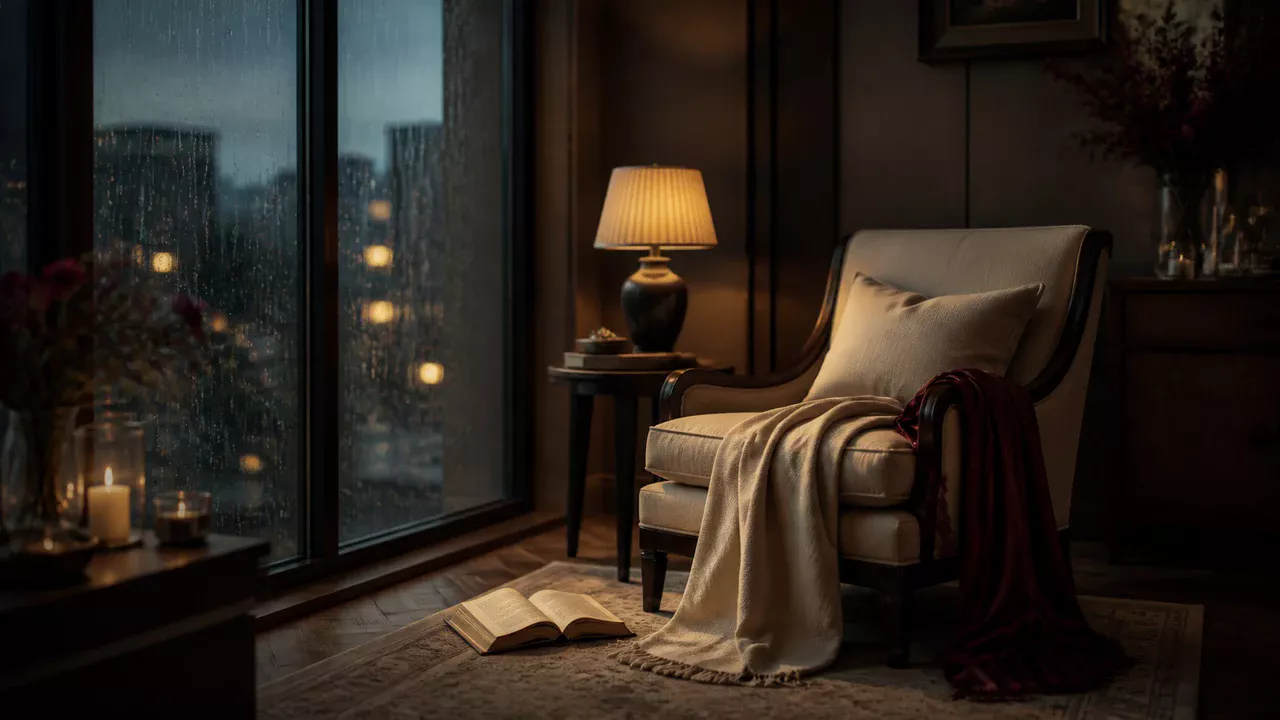
I notice this first in pace. Good erotic writing does not rush to prove that it belongs in its own category. It trusts a glance across a table, the quiet of a hotel corridor, the sound of rain against a window. It knows that a body does not arrive alone; it brings its history, its hesitation, its appetite, its ability to say yes or no.
That attention changes the reader’s position, too. I do not want to watch two people being arranged for me. I want to be brought close enough to understand why this moment matters to them.
I want desire to begin before touch

Some of the most sensual writing I know begins with an ordinary object made newly important. A glass left on a counter. A cuff unbuttoned slowly. A coat that carries the cold of the street into a warm room. The object is never the point. It is simply where attention lands when two people are trying not to reveal how much they have noticed.
That is the kind of tension I return to. It has nothing to do with playing coy. It has everything to do with allowing attraction to become specific. Why this person? Why tonight? Why does Sophia—or any woman at the center of a story—choose to stay when she could leave?
When a story gives me those answers, even quietly, the sensuality feels earned. The characters are not props for a fantasy that begins and ends at the surface. They are adults with boundaries, private wants, and the freedom to change the terms. Their desire becomes more interesting because it is a choice.
I think this is why I prefer the almost-touch to the inventory. The almost-touch contains a question. It lets the reader feel the possibility of refusal as well as the possibility of closeness. Consent is not an interruption to tension; it is what makes tension safe enough to deepen.
Language should make room for the reader
There is a kind of erotic language that leaves no space at all. It names every movement, decides every feeling, and gives the reader nothing to bring of her own. I find it less intimate than it intends to be.
I prefer prose with a little margin around it. A well-chosen detail can do more than a crowded paragraph: silk cooling against a wrist, the low note of a record ending, a thumb waiting at the edge of someone’s hand. These details are not evasions. They are invitations. They let the reader enter the scene with her own memory, her own curiosity, her own definition of what the moment might become.
That kind of writing requires confidence. It is tempting to explain every spark, especially when a story is afraid of being misunderstood. But desire is often clearest in what it does not explain. A pause can say, I am here. I am listening. I am deciding.
For me, the most beautiful erotic literature respects that intelligence. It does not confuse mystery with vagueness, and it does not confuse explicitness with courage. It chooses its words with the same care I would choose a perfume: close to the skin, memorable after the room has emptied.
Why a woman’s point of view changes the temperature
When I say that I want erotic literature written with women in mind, I do not mean that every story must sound the same or desire the same thing. I mean that I want the interior life to matter. A woman should not appear only as a body being watched, rewarded, persuaded, or decoded.
I want to know what she notices before she is noticed. I want to feel her private calculation, her pleasure in her own attention, the small shift that makes her decide she is no longer merely being polite. I want her to have a life outside the scene: a reputation she protects, a question she has not answered, a boundary that is real because she made it.
This does not make a story less sensual. It makes it more charged. Agency gives intimacy its voltage. When a woman is allowed to want, to pause, to change her mind, and to choose again, desire stops being something that happens to her. It becomes a language she speaks.
That is the voice I search for as a reader and try to preserve when I write: not a lecture, not a slogan, but the felt certainty that a woman’s pleasure belongs to her long before anyone else enters the room.
Restraint is not the opposite of passion
People sometimes talk about restraint as if it were an apology. I see it differently. Restraint is a form of focus. It tells me that the writer knows which details matter and which ones only make more noise.
A slow-burn scene can be intensely passionate because it makes each movement count. The first honest question. The decision to sit closer. The moment a character stops pretending the evening is ordinary. None of this is timid. It is precise.
I am drawn to literature that understands the difference. It lets passion have consequence. It remembers that closeness can expose as much as it comforts. It gives the characters an after-effect—a thought they cannot quite put away, a room that feels changed after someone leaves, a new truth about what they are willing to ask for.
Without that emotional residue, even the most dramatic scene can feel strangely empty. With it, a single sentence can stay with me for days.
A scene becomes unforgettable when it delays its own certainty. Two adults stand in a kitchen after everyone else has gone home. Nothing extravagant happens: a glass is rinsed, a sleeve is pushed back, one of them asks whether the other wants tea. Yet the question carries the whole evening inside it. There is care in the asking, room in the answer, and a little danger in how both of them wait.
That is the standard I quietly keep. I do not need literature to protect me from desire. I need it to understand desire well enough not to flatten it. The best scenes let pleasure coexist with self-knowledge. They leave the characters more visible to themselves, not less. I finish them feeling as though someone has turned down the noise in the world and made one private truth easier to hear.
Perhaps that is what elegance finally means to me: not distance, but discernment. It is the confidence to let a scene breathe, to trust the reader with an unfinished thought, and to understand that passion can be most persuasive when it has chosen exactly where to stop.
How I choose sensual reading for a quieter night

On a night when I want to read something sensual, I look for a few simple signs. I want characters who feel adult and fully awake inside their own choices. I want prose that can hold a mood without decorating every line. I want desire that grows from attention rather than entitlement.
- Look for a point of view with agency. The narrator or central character should have a real inner life, not merely a role in someone else’s fantasy.
- Notice the pace. A story does not need to move slowly everywhere, but it should let important emotional turns register.
- Listen for specificity. A particular setting, gesture, or conversation will stay with me longer than generic declarations.
- Pay attention to consent. Mutual interest and the freedom to pause make intimacy feel more, not less, alive.
- Choose a story with an ending that lingers. I want more than a scene; I want the feeling that something true has shifted.
My secret witness, this is not a checklist for being a perfect reader. It is only a way of protecting the kind of atmosphere I want to enter. Reading can be private without being empty. It can be sensual without becoming loud.
I read for the feeling that remains
The erotic literature I return to is rarely the loudest. It is the writing that trusts me to notice. It gives me a woman who is fully present in her own desire, a room with a pulse beneath its silence, and a moment that does not need to explain itself to be real.
That is why elegance matters to me. It is not polish for its own sake. It is respect: for the characters, for the reader, and for the private, complicated ways we come to know what we want.
It also leaves room for surprise. A story can begin with a familiar ache and still arrive somewhere unexpected because the people inside it are allowed to be complicated. They may want closeness and fear its cost. They may understand the invitation only after they have nearly missed it. That unfinished human texture is what lets a private scene feel alive rather than arranged.
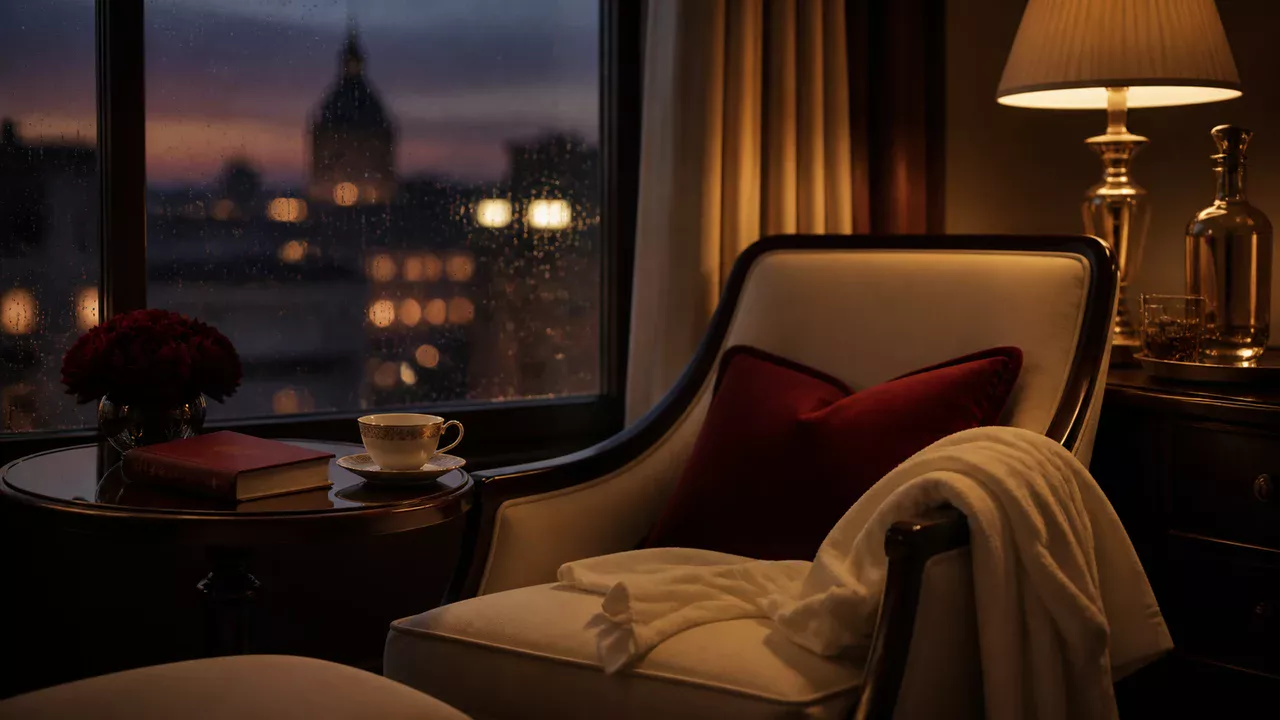
When I want to carry that mood beyond the page, I begin with the room rather than a grand plan. A private evening at home is one of the small rituals I return to when I want the world to soften at the edges and leave a little more space for attention.