The bell above the door had already been turned to silent when I arrived with a book I did not want to return.
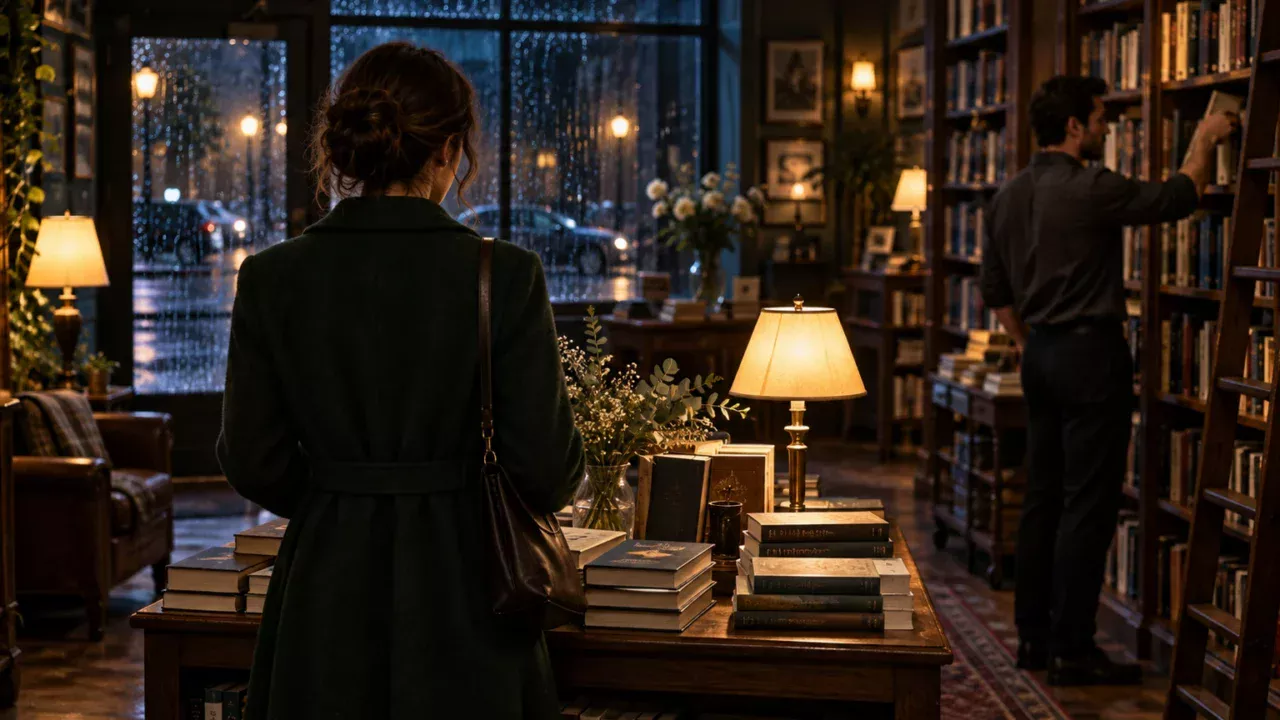
Rain had pushed everyone indoors by six, and by seven the bookshop had become a small, amber country of wet coats, lamps, and patient shelves. I had spent an hour pretending to browse before I understood what I was doing: circling the same hardback, reading its first page, placing it back, then finding it again in a different corner.
When I finally carried it to the counter, the man there looked at the rain on my sleeves, then at the book.
“You know we close in five minutes,” he said.
“I know.”
“And still you have found the one book with no price inside.”
His name was Elias, according to the small card beside the till. He had a loose sleeve rolled to his forearm and the calm concentration of someone who had spent a long day putting other people’s choices back in order. I had seen him twice before in the shop, always from a distance. He had never seemed to hurry anyone toward a purchase. That was one reason I had kept returning.
“I can leave it,” I said, though I held the book a little closer.
He looked at me then, properly. “Do you want to?”
The question was so simple that it made me smile. “No.”
“Then stay for a minute. I will find out what it is.”
The book had waited for me longer than I had
He took the hardback from my hands with care, as if the missing price might be a private embarrassment. Its cloth cover was the colour of midnight and its pages smelled faintly of dust and paper warmed by too many lamps.
“It arrived in a box from an old estate,” he said. “No invoice. No note. A very romantic way to make an inventory problem.”
“Perhaps it wanted to choose its reader.”
“That sounds expensive.”
I laughed, and something in him answered it—not flirtation exactly, not yet, but attention. The kind that made the small space between the counter and my hands feel newly occupied.
I had come to the bookshop after a dinner I had left early. A friend had been kind enough to say I seemed distracted; kind enough, too, to ask whether I was all right. I had said yes because it was easier than explaining that I had become tired of being admired for my ability to need very little.
Elias disappeared into the back room with the book. I could have walked out then. The rain gave me an excuse. So did the hour. But the shop was warm, and he had told me to stay.
He found the answer in the back room
When he returned, he was holding a small card between two fingers. “It is a collection of letters. And it is twenty-eight pounds.”
“That is less romantic than I hoped.”
“The romance is included at no extra charge.”
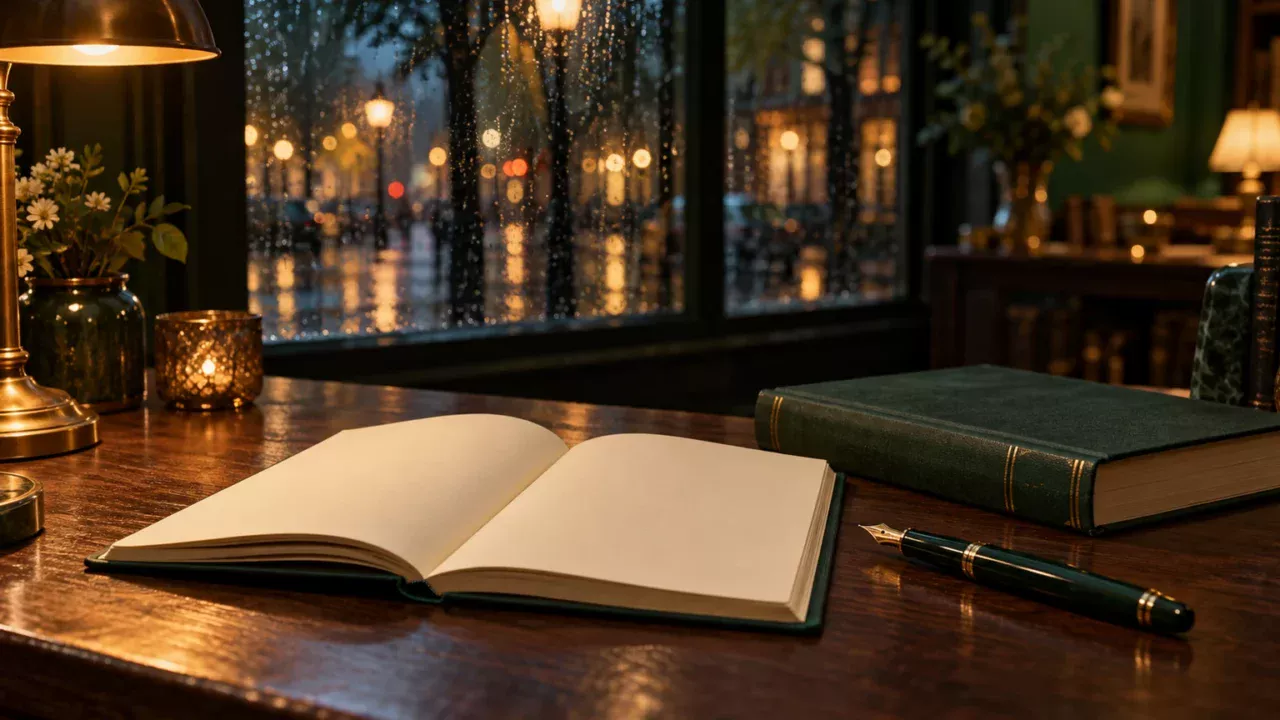
As he wrapped the book in tissue, I noticed an invitation card tucked beside the register. The ink on it was still drying. A reading, the following Thursday. An unnamed novelist. Six chairs, perhaps eight, arranged between the travel section and the poetry shelf.
“Do you host readings after closing?” I asked.
“Sometimes. When the author is brave enough to read to six people.”
“And when are you brave enough to read?”
He stopped folding the paper. Not for long. Long enough for me to regret the question, then long enough for him to decide not to evade it.
“I used to be,” he said. “Before I began spending more time arranging other people’s words.”
There was no self-pity in his voice. That made the answer harder to forget.
“Maybe you are arranging a place for them,” I said.
“Maybe.” He placed the wrapped book on the counter but did not slide it toward me. “Do you write?”
“I revise.”
“That was not my question.”
The rain ticked harder against the glass. Outside, a bus passed with its windows blurred gold. I rested my palm on the parcel, feeling the sharp corner of the book beneath the tissue.
“Yes,” I said. “But I have not shown anyone anything in a very long time.”
We were both better at keeping other people’s words safe
He locked the till and turned the sign in the window from open to closed. Then he looked at the door, at the rain, and back at me.
“I need to finish shelving before I can leave,” he said. “You are welcome to wait where it is dry. Or not. There is no hidden obligation in either answer.”
I appreciated that he said it plainly. I had spent enough evenings mistaking someone else’s hope for a demand. This was not that. He was offering me a chair near the radiator and nothing I had not chosen.
“I would like to wait,” I said.
“Good.” His smile appeared slowly. “There is tea in the back. It is not excellent tea, but it has survived the week.”
“A serious recommendation.”
“I am a bookseller. We respect a thing that lasts.”
He made the tea while I wandered the shelves without pretending to browse. The shop felt different after closing. Not private exactly; private was too easy a word for it. It felt released from performance. No one needed to buy anything. No one needed to become the kind of person who read difficult books or carried a particular title home beneath an umbrella.
When he brought the cups, he did not place one in my hand. He set both on a low table beside the chair and waited until I chose mine.
“You have thought about this,” I said.
“About tea?”
“About giving people room.”
He leaned against the shelf opposite me. “I think people tell you what they need if you stop filling in the answer for them.”
That was a dangerous thing to hear from a man who had noticed I revised instead of writing.
The ladder made us honest

Later, he stood at the foot of a rolling ladder with a stack of new arrivals against his chest. “Would you mind holding this steady?”
“I thought you said you were a professional.”
“I said I was a bookseller. The ladder has always had its own ideas.”
I put my hand on the cool rail and watched him climb. From below, I could see the care with which he chose each space, turning a spine outward, shifting two volumes so a title could breathe. It should not have been intimate, that small concentration. Yet I felt it in the room like a held note.
“You do not have to tell me,” he said from above, “but what happened to the thing you wrote?”
I could have answered with the safe version: work, life, a lack of time. The true answer was less elegant. I had written a series of short pieces about women who wanted more than they could explain, then hidden them because I feared someone would call them too much.
“I let someone read it,” I said. “They told me it was beautiful but difficult to place.”
He was quiet for a moment. “That is a strange way to dismiss something.”
“It worked.”
He climbed down until he was one step above me. “Did it?”
The question found the exact place where I had made a habit of disappearing. I looked up at him. His hands were still on the ladder. There was space between us, and he had left it there.
“No,” I said. “Not really.”
He nodded as though I had trusted him with something breakable. “Then perhaps difficult to place is not the same as impossible to keep.”
I wanted to touch his wrist. I did not. Wanting was allowed to remain a question until I chose otherwise.
I asked before I changed the distance between us
He stepped down to the floor. The aisle was narrow enough that I could smell rain in the wool of his shirt, tea on his breath, something clean and cedar-like beneath both. But he did not move closer.
“Elias,” I said.
“Yes?”
“May I kiss you?”
His expression softened first, then brightened with something warmer. “Yes. You may.”
I had expected confidence to feel like certainty. Instead it felt like this: asking a question and being able to hear the answer. I touched the side of his face, waiting once more. When he leaned toward me, I closed the last inch myself.
The kiss was unhurried. Not an interruption to the conversation, but an answer shaped by it. His hand came to my waist only after I moved nearer. When I smiled against his mouth, he smiled too, and the sound of it made me feel less afraid of my own happiness.
We drew apart because I wanted to see him. Because the moment was better for having room around it.
“Was that difficult to place?” he asked.
“No,” I said. “That one was very clear.”
The invitation was not a promise, only a door
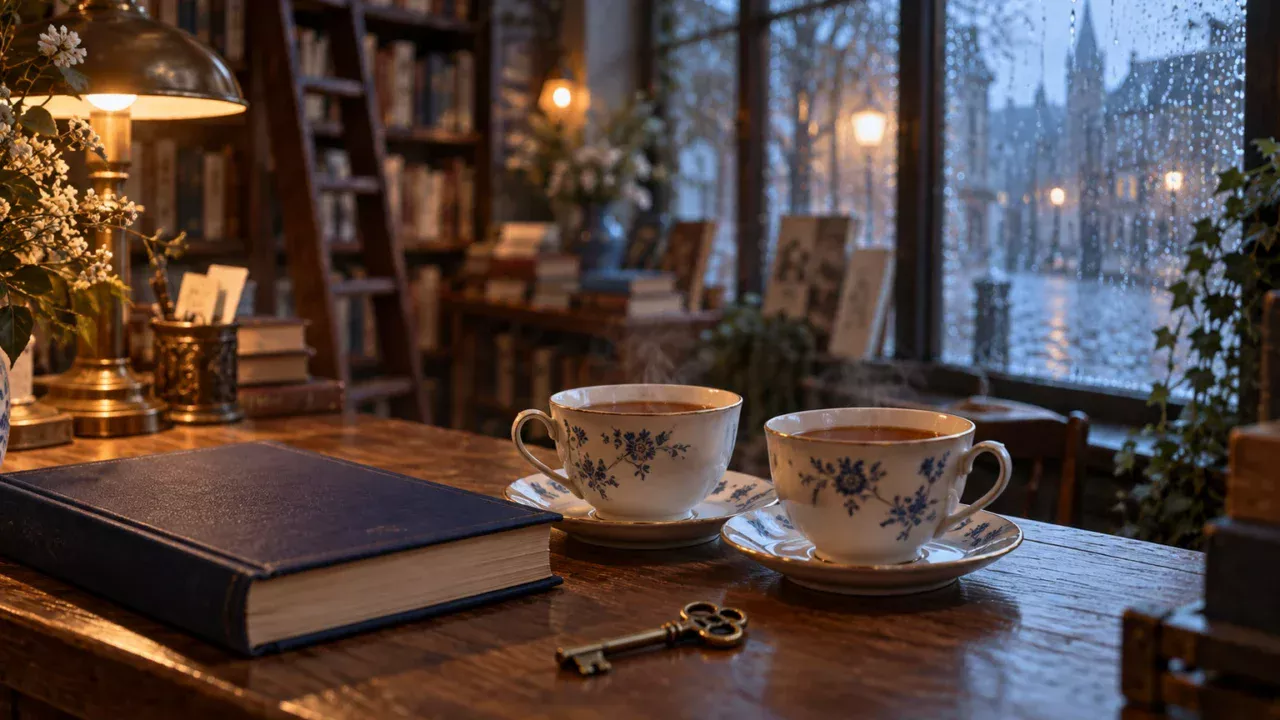
We did not stay until dawn, though the rain made the night feel capable of it. He finished the last shelf. I bought the book and, before I left, wrote my name beside his on the reading list for Thursday.
At the door, Elias held out my umbrella. “You do not have to read,” he said. “You can come and listen.”
“And you?”
He glanced toward the invitation card. “I might read one page.”
“That sounds brave.”
“Only if there are six people.”
I opened the umbrella beneath the awning. The street was silver with rain and the bookshop window glowed behind him, filled with all the stories that had waited patiently for someone to choose them.
“Thursday,” I said.
“Thursday,” he answered.
Then I walked home with the midnight-coloured book under my arm, carrying something else more carefully: the knowledge that I could ask for what I wanted and still leave the door open for surprise.
If you would like another quiet story of a night altered by a missed departure, read The Last Train Was Already Gone.