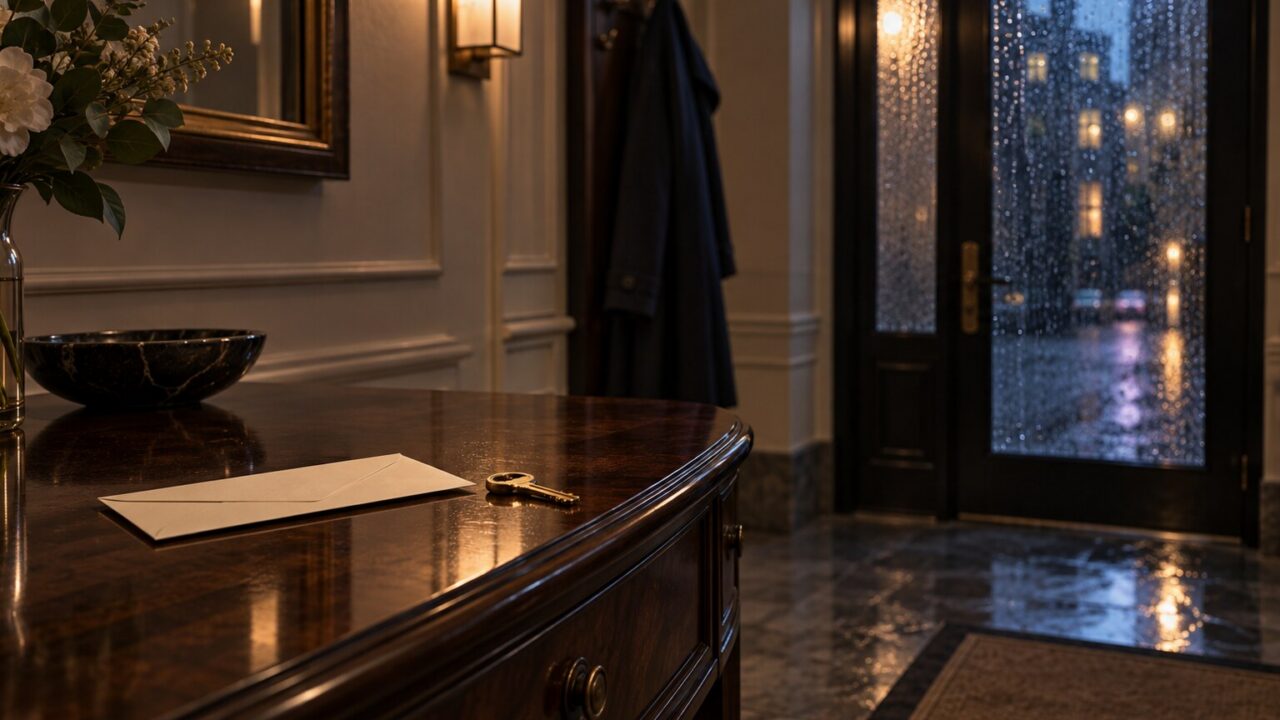
At 11:43, while I was fastening the last button of my coat, my phone lit the inside of my bag.
I saw his name before I heard the sound. Julian. Six letters I had taught myself to pass without touching, like a shop window after midnight.
The voicemail was seventeen seconds long. I knew that because I looked at the number twice and did not press play. Outside the studio, Ninth Avenue was still carrying its ordinary Friday noise: a cab braking sharply, someone laughing under an awning, the dry rustle of a newspaper against the grate. I had spent the evening choosing fabric samples for a client who wanted a collection to look effortless. Now I stood beside the service elevator in my dark wool coat, holding a phone as if it contained a less manageable assignment.
Julian and I had never been together. That was the problem. We had been almost together in a dozen exquisitely plausible ways: dinners left unfinished because one of us had an early flight, a hand at the small of my back in a crowded room, long conversations with their endings carefully postponed. Then, last winter, he accepted a position in London before telling me he had applied. I told him I was pleased for him. He told me he would call. Neither sentence had been a lie, exactly. Neither had been enough.
The message waited beneath my thumb
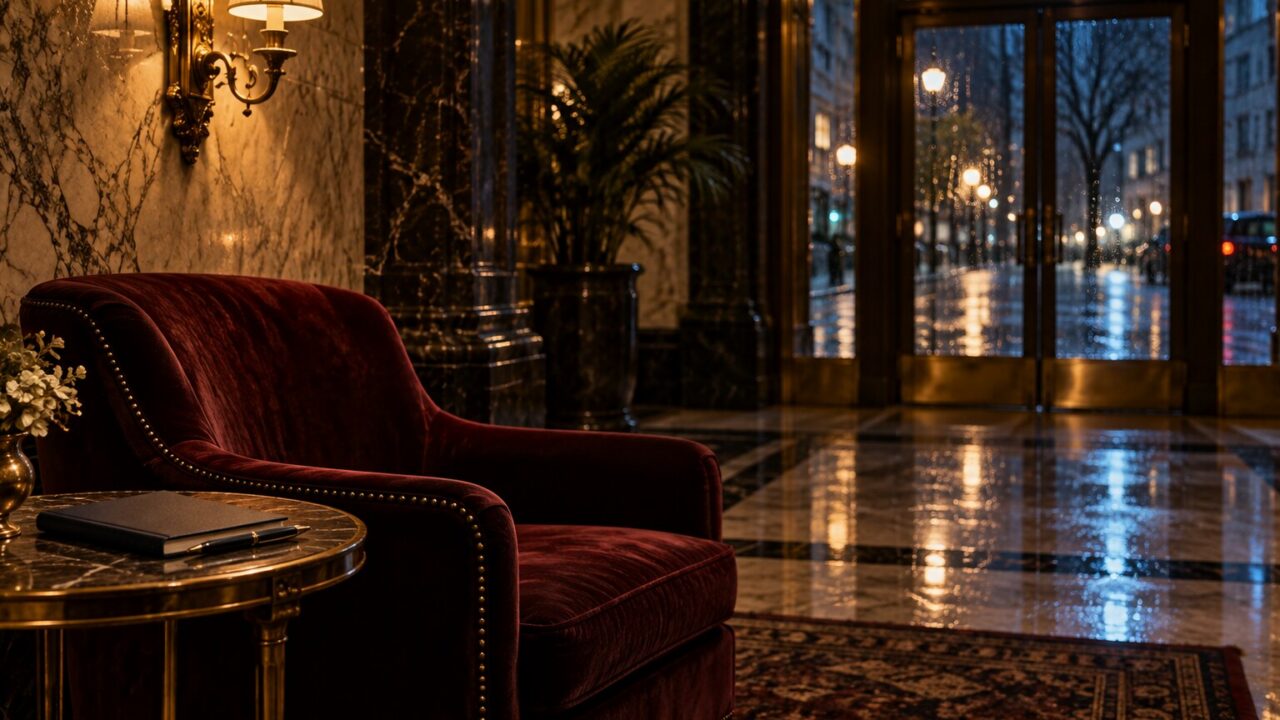
I could have listened in the elevator. I could have listened in the cab, with the city providing a suitable amount of drama around it. Instead, I walked three blocks to the lobby of the old building where my aunt once kept an apartment. The doorman had changed years ago, but the marble was the same, and the small brass phone alcove near the mailboxes still held a kind of public privacy.
I sat beneath the amber lamp and pressed play.
There was one breath, then Julian’s voice.
“Sophia. I’m in New York until tomorrow afternoon. I know this is late. You don’t have to call. I only wanted to say I should have told you the truth before I left.”
Then the message ended.
No request. No address. No little hook concealed inside an apology. I listened again because the absence of pressure made it harder to decide what I wanted.
My first instinct was not anger. It was recognition: the old, polished instinct to make a beautiful restraint of my silence. I had been very good at that with Julian. I had mistaken composure for clarity and let every unasked question become proof that I was asking nothing.
I opened the message screen. My thumb formed the first word—Why?—then stopped.
It was not the question I wanted answered. The question I wanted was smaller, and therefore more dangerous: Did you think I would make it difficult for you to go?
I would not let a half-apology decide the night
The lobby clock moved past midnight. Through the glass doors, a woman in silver shoes crossed the street alone, her pace swift and certain. I admired her for no particular reason. Perhaps because she did not seem to be rehearsing a version of herself that would be easy to forgive.
I called Julian.
He answered on the second ring. “Sophia.”
“You are in town.”
“I am.” His voice was lower than the message, less arranged. “I’m sorry I called so late.”
“I’m not.” I looked at my reflection in the lobby glass: a woman sitting straight in a quiet corner, phone against one ear, coat still buttoned. “But I don’t want a conversation that begins and ends with sorry.”
He was silent long enough that I could hear the hotel air-conditioning on his side.
“Neither do I,” he said.
“Then tell me why you left without telling me you were trying to leave.”
“Because I wanted the job,” he said. “And because I knew that if I told you before it was decided, I might have had to admit I wanted you to ask me not to take it.”
The honesty landed without elegance. I respected it for that.
“I would not have asked,” I said. “But I might have asked you what it meant.”
“I know.”
“No. You know now. At the time, you made the choice for both of us.”
His breath changed. “You’re right.”
I had expected the admission to soften me. Instead it made the boundaries of the night visible. He had called because he was finally willing to be seen in a less flattering light. That did not obligate me to make him feel better about it.
“Where are you?” I asked.
“At the Mercer.”
“I’m not coming there.”
“I didn’t ask you to.”
“Good.” I let the small relief between us remain audible. “There’s a café on Lafayette that stays open late. Ten minutes. We talk for one hour. No decisions made because the city has gone quiet.”
“One hour,” he said. “Thank you.”
“Don’t thank me yet.”
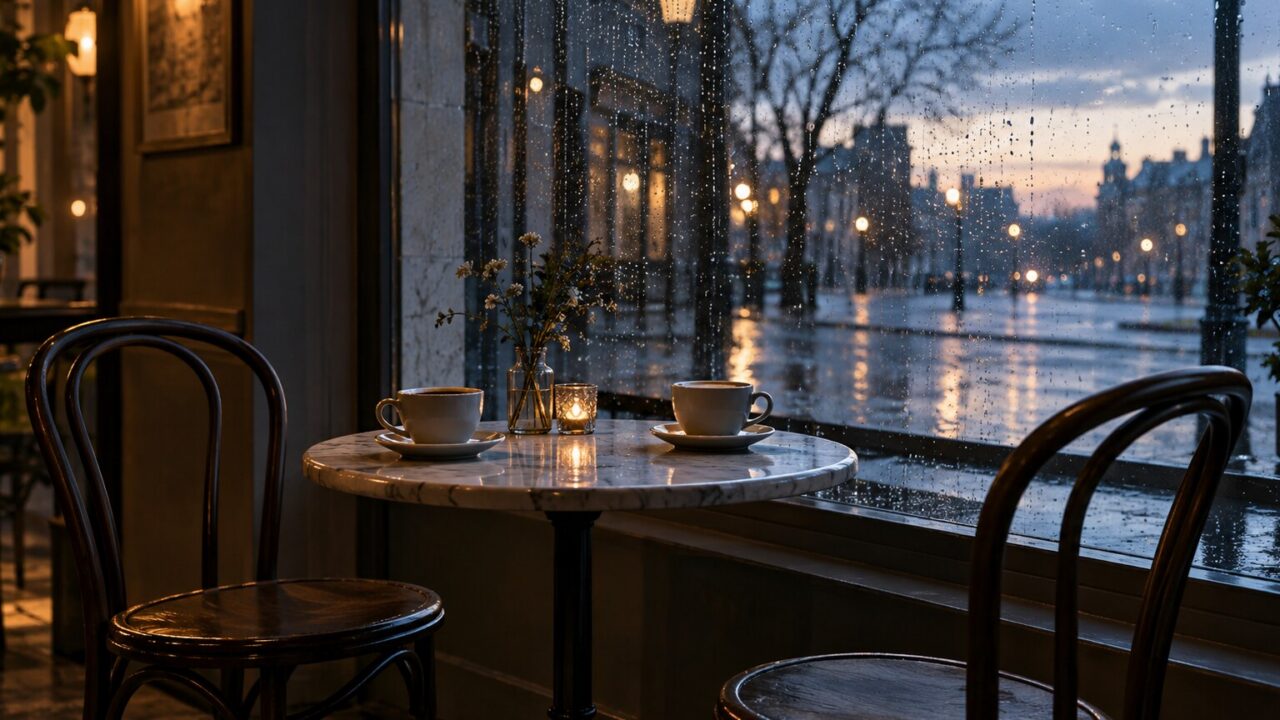
At the café, we said the part we had edited out
He was already at the corner table when I arrived, not standing to create an entrance, not reaching for my coat. He looked older in the good, difficult way—less certain that charm could solve the moment. A cup of black coffee sat untouched before him.
“You look tired,” I said as I sat down.
“I am.”
“That is not the same as being sorry.”
His mouth almost smiled. “Still direct.”
“Only when I have waited too long.”
For the next forty minutes, we did not repair our history. We named it. He told me London had been an escape from a life he had built by accepting every impressive offer before he could decide whether it suited him. I told him that I had made his silence convenient because being disappointed privately felt safer than asking to be considered openly.
“I thought you wanted someone more certain,” he said.
“I wanted someone honest enough to be uncertain in front of me.”
He looked down at his hands. “I could not do that then.”
“Can you now?”
He met my eyes. “I’m trying to.”
There was no kiss across the table. No sudden claim that the year between us had merely been a scenic detour. I was grateful for that. The night did not need to become a reward for his apology, or a punishment for mine.
When the hour was nearly over, Julian folded his hands around the coffee cup.
“I fly back tomorrow,” he said. “I don’t want to ask for a promise.”
“Good.”
“But I would like to write to you. Properly. Not a message sent at midnight because I’m afraid of daylight.”
I considered the difference. A letter could still be cowardly. It could also be a way of giving words the time they needed before asking them to be answered.
“Write,” I said. “And say what is true, even if it makes you less impressive.”
“I can do that.”
“We will see.”
I kept the voicemail because I had answered myself
Outside, the street had begun to pale at its edges. Julian walked me to the corner, then stopped when I stopped. He did not ask to come farther. I did not offer a future I could not yet picture.
“Goodbye, Sophia,” he said.
“Goodnight, Julian.”
He crossed toward the avenue. I watched him go only until the crowd took him back.
On the ride home, I opened the voicemail one last time. His seventeen seconds were still imperfect. They had not become a grand confession simply because I had listened. But I did not delete them.
Not because I was preserving him. Because the message marked the evening I stopped pretending that silence was the same thing as dignity. I had called. I had asked. I had chosen the terms of the conversation and left while they were still mine.
By the time I reached my door, dawn had found the windows across the street. I set my phone facedown on the hall table and let the quiet return—not empty now, but answered.